
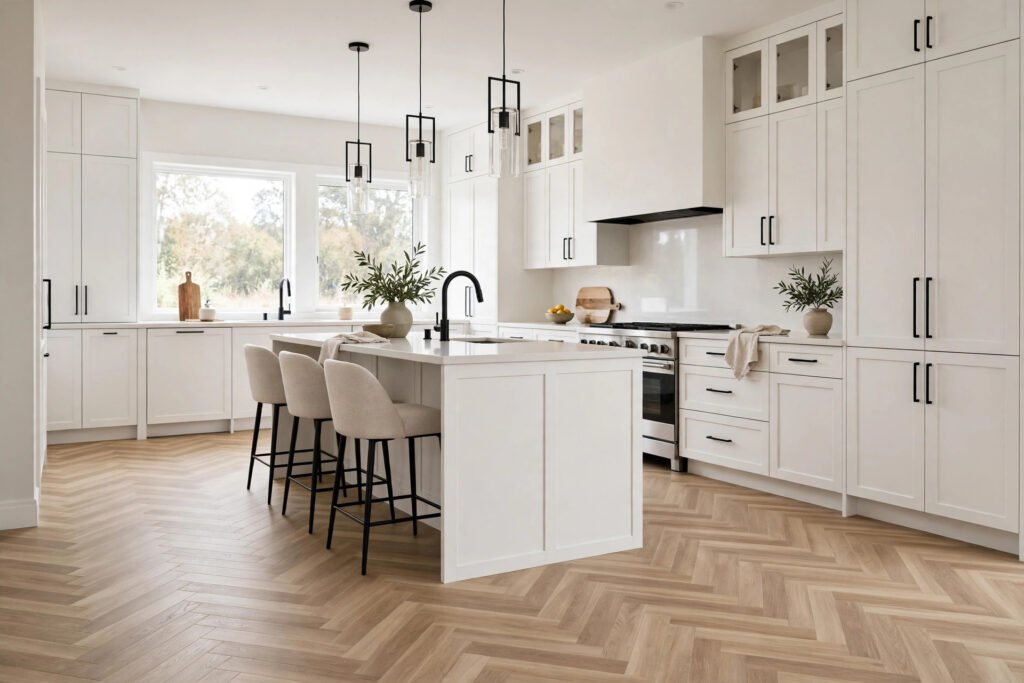
The herringbone pattern turns heads in any room, but not every room treats a floor kindly. Kitchens splash, bathrooms steam, hallways carry wet boots in from the rain, and utility rooms seem designed to test every joint a floor has. That is the room where herringbone vinyl flooring earns its place. It delivers the same classic zigzag look as timber parquet, in a material built to cope with water, spills and heavy daily traffic.
This guide explains what herringbone vinyl flooring is, how it is made, why it handles water so differently from laminate, the two main fitting methods, and how to keep it looking new. If you are choosing between vinyl and laminate, the construction and water-resistance sections below will settle the decision for your specific room.
What Is Herringbone Vinyl Flooring?
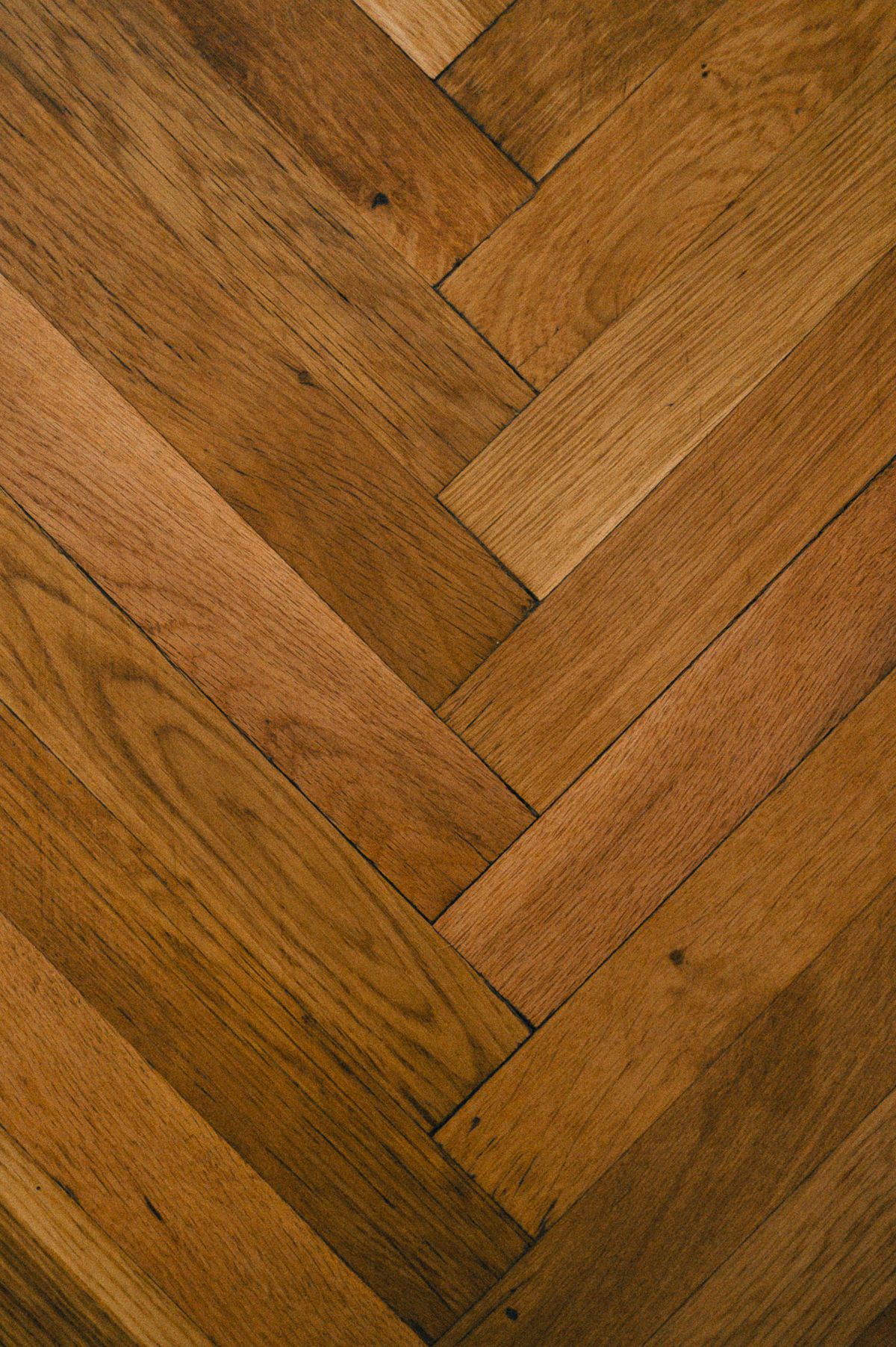
Herringbone vinyl flooring is vinyl flooring cut into planks or tiles and laid in the herringbone pattern, where each piece meets the next at a right angle to create a continuous zigzag. Like its laminate lookalike, it borrows the visual language of traditional parquet, but the material underneath the wood-effect surface is entirely different: layers of vinyl rather than a fibreboard core.
Vinyl herringbone is available in a wide range of wood tones, from pale Scandinavian oak to dark smoked walnut, and in stone-effect finishes for those who want the pattern without the timber look. Because the surface is printed and protected by a wear layer, the pattern stays consistent across the floor, and individual planks can be replaced if one is damaged.
How Herringbone Vinyl Flooring Is Made: LVT and SPC
Two types of vinyl dominate the herringbone market, and knowing which you are buying matters. Luxury vinyl tile, or LVT, is a flexible vinyl product built from several PVC layers: a backing layer, a printed design layer showing the wood grain, and a clear wear layer on top that protects against scratches and stains. Glue-down LVT is thin and flexible, and it follows the subfloor closely, which is why subfloor preparation matters so much for this type.
Stone plastic composite, or SPC, is a rigid-core vinyl. Its core blends limestone powder with PVC, producing a plank that is stiffer, more dimensionally stable and less sensitive to temperature change than flexible LVT. Most click-lock herringbone vinyl sold today is SPC, because the rigid core allows planks to lock together and float over the subfloor without adhesive. SPC also tends to feel firmer underfoot, closer to laminate, while still keeping vinyl’s water resistance.
Wear-layer thickness is the number to check when comparing products. Measured in millimetres, it typically ranges from around 0.3mm for light residential use to 0.5mm or more for busy family homes and light commercial spaces. A thicker wear layer does not change the look, but it directly affects how long the floor resists scratches, scuffs and fading before the print underneath is exposed.
Vinyl vs Laminate: Why Water Resistance Is the Deciding Factor
This is the clearest difference between the two herringbone materials, and it should drive your choice. Laminate has a fibreboard core that swells if water reaches it through the joints, so it suits dry rooms and needs spills wiped up quickly. Vinyl has no fibreboard to swell. Its PVC layers do not absorb water, so a spilled mop bucket, a wet dog shaking off rain, or a bathroom splash does not threaten the structure of the plank in the same way.
That does not mean every vinyl floor is fully waterproof in every sense. The planks themselves resist water, but water can still find its way through poorly fitted joints to the subfloor beneath, and prolonged standing water should still be cleaned up. Glue-down vinyl, properly fitted with tight joints, gives the best protection against water reaching the subfloor, while click vinyl relies on the tightness of its locking system. Even so, for bathrooms, kitchens, utility rooms, porches and any room where water is a regular event rather than an accident, vinyl is the materially safer choice over laminate.
Comfort is the other trade-off. Vinyl is generally quieter and softer underfoot than laminate, which many households prefer in kitchens where people stand for long periods, and in upstairs rooms where footfall noise matters. It does not, however, replicate the hard, solid feel of timber quite as closely as laminate does. If your priority is the firm feel of wood in a dry living room, laminate may still win; if your priority is surviving water and daily wear in a busy room, vinyl takes it.
Where Herringbone Vinyl Flooring Works Best
Herringbone vinyl is the natural choice for kitchens, bathrooms, utility rooms, hallways, porches and open-plan spaces that flow into a kitchen. In a kitchen, it handles cooking splashes, dropped liquids and frequent mopping without the anxiety that comes with a water-sensitive floor. In a bathroom, it offers a warmer, softer alternative to cold tile while coping with steam and splashes far better than laminate or real wood.
It also suits rental properties and family homes where durability matters more than prestige. Pet claws, toy cars, high heels and dragged furniture all test a floor, and vinyl’s wear layer is designed for exactly that kind of daily punishment. In commercial-style settings such as a home office that doubles as a client-facing space, or a small studio, SPC vinyl’s rigid core and thicker wear layers provide a practical, smart-looking surface that is easy to keep clean between visitors.
One room needs a caveat: conservatories and rooms with large south-facing glazing. Vinyl can be sensitive to extreme temperature swings and prolonged direct sunlight, which can cause expansion, gapping or fading in some products. If your room regularly gets very hot, check the manufacturer’s temperature limits and consider window treatments or a product specifically rated for high-temperature stability before committing.
Durability, Scratches and Stains
Vinyl’s wear layer is its armour. It resists most household stains, from coffee and tomato sauce to muddy paw prints, provided spills are cleaned reasonably promptly. Unlike laminate, a scratched vinyl plank does not expose a fibreboard core that then swells; the damage is usually cosmetic and confined to the surface. Deeper gouges from dragging heavy furniture without pads can still mark it, so felt pads and lifting rather than dragging remain good habits.
Sunlight fading is worth considering in bright rooms. Quality vinyl includes UV stabilisers in the wear layer, but prolonged, intense sunlight can still fade any printed floor over time. Rugs in the sunniest spots, or blinds during the brightest hours, help preserve colour, though this is a consideration for all printed flooring, not vinyl alone.
Replacement is straightforward for both fitting types, though the method differs. A damaged click plank can often be lifted and swapped, while a damaged glue-down plank can be cut out and replaced with a spare, using adhesive and a roller to bond it. As with laminate, buying spare planks from the same batch at installation time is the simplest insurance against a visible colour mismatch later.
Preparing the Subfloor
Vinyl is less forgiving of subfloor imperfections than laminate, and this is especially true for glue-down LVT. Because the planks are thin and flexible, every dip, ridge, old adhesive lump or screw head can telegraph through to the surface over time. The subfloor should be smooth, level, dry and clean, and for glue-down work it often needs a smoothing compound or plywood overlay to create a flawless base.
Click SPC vinyl is more tolerant because its rigid core bridges minor imperfections, but it still needs a flat, stable base and a moisture check, particularly over concrete. Removing the old floor creates waste that needs planning: adhesives, old vinyl and underlay cannot all go in a general skip, so read our guide to what you cannot put in a skip during a renovation before demolition day. Fitting vinyl also calls for specific tools — a sharp utility knife and straight edge for glue-down cuts, or a saw and spacers for click planks — and our guide to home improvement tools covers the kit that makes the job cleaner and faster.
Fitting Herringbone Vinyl Flooring
There are two fitting methods, and they suit different situations. Glue-down LVT is stuck directly to the prepared subfloor with a suitable adhesive, plank by plank, following the herringbone layout. It gives the most stable, quietest result and the best water protection at the joints, but it demands a near-perfect subfloor, careful adhesive application and patience, since planks cannot be repositioned once the adhesive grabs. It is usually a job for a professional fitter, particularly in a herringbone pattern where alignment errors are conspicuous.
Click-lock SPC vinyl floats over the subfloor on underlay, with planks locking together without adhesive. It is faster to fit, easier for a confident DIYer, and simpler to repair, since planks can be lifted. The trade-off is a slightly higher floor height and a little more movement underfoot than a glued floor, plus a greater reliance on the locking system to keep joints tight against water. An expansion gap around the perimeter, hidden by skirting or beading, is still required, just as with laminate, to allow for seasonal movement.
Whichever method you choose, the herringbone layout needs the same careful planning as laminate: start from a central line or focal wall, keep the zigzag aligned, and allow a generous waste allowance for the many cuts at walls and doorways. Dry-laying a few rows before committing adhesive or locking planks is a simple step that catches alignment drift early, when it is still easy to correct.

Cost Factors to Weigh Up
As with any flooring, the headline pack price is only part of the total. Glue-down vinyl adds adhesive and, usually, professional fitting and subfloor smoothing, which raise the upfront cost but deliver a very stable, long-lasting result. Click SPC vinyl is generally quicker and cheaper to fit, and may suit a DIY project, but the planks themselves and the underlay still factor in, along with skirting, thresholds and a higher waste allowance for the herringbone pattern.
Long-term value also counts. Vinyl’s water resistance means fewer replacements in wet-prone rooms, and its easy cleaning keeps maintenance time low. When comparing vinyl with laminate or tile for the same room, weigh not just the initial outlay but how often the floor is likely to need repair or replacement in that room’s actual conditions — a floor that survives a kitchen for years is better value than a cheaper one that fails at the first major spill.
Caring for Herringbone Vinyl Flooring
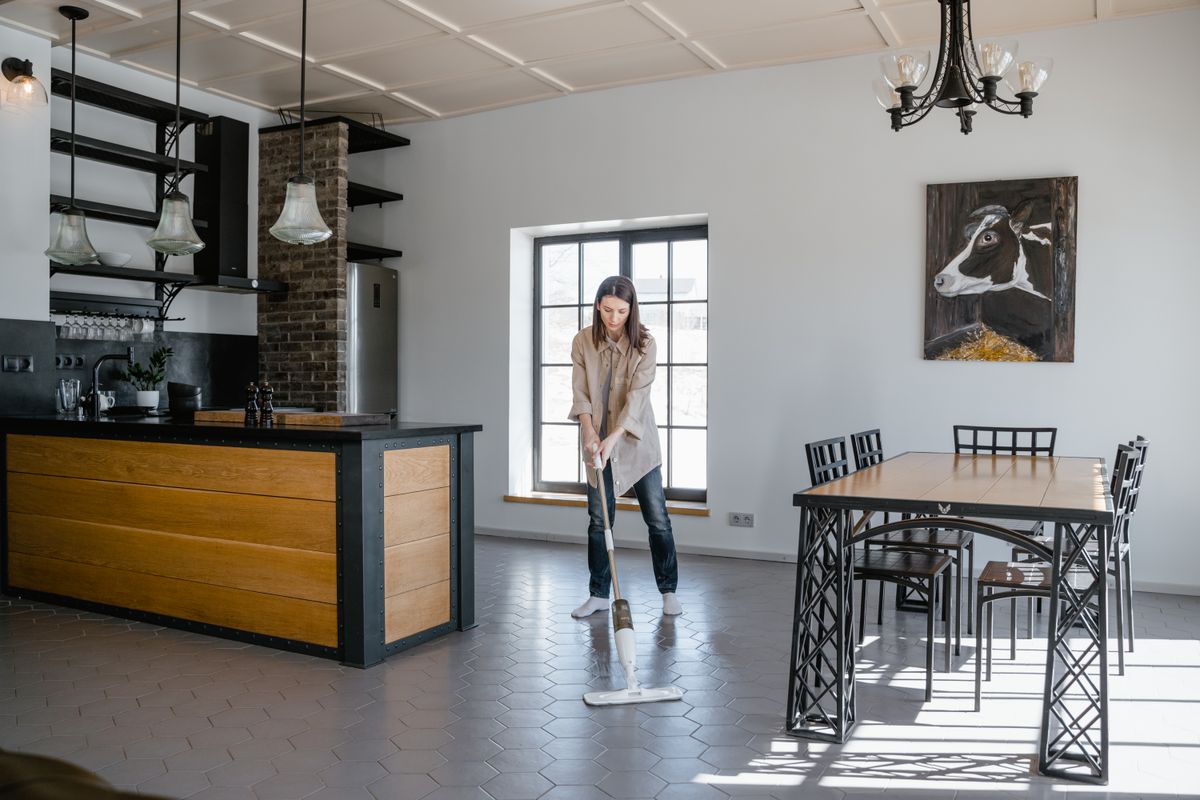
Vinyl is among the easiest floors to maintain, which is a large part of its appeal in kitchens and bathrooms. Sweep or vacuum regularly to remove grit, then damp-mop with a vinyl-safe cleaner. Unlike laminate, vinyl tolerates a damp mop well, and most spills can be wiped up without urgency, though cleaning them promptly still keeps the floor looking its best.
Avoid abrasive scourers, harsh solvents and wax-based polishes not designed for vinyl, which can dull the wear layer or leave a build-up that attracts dirt. For stubborn marks, a small amount of cleaner on a soft cloth is usually enough. Steam mops should be used with caution: many manufacturers advise against them, since sustained heat can affect the adhesive in glue-down floors or the locking system in click floors, so check your product’s guidance before using one.
Common Mistakes to Avoid
- Laying glue-down vinyl on a rough subfloor: Imperfections show through thin LVT within weeks — preparation is not optional.
- Skipping the expansion gap: Even rigid SPC needs room to move with temperature change.
- Assuming all vinyl is identical: Flexible LVT and rigid SPC behave differently; check which type you are buying.
- Ignoring the wear layer: A thin wear layer in a busy kitchen will show its age far sooner than a thicker one.
- Under-ordering: Herringbone layouts need a generous waste allowance for cuts at edges and doorways.
- Using the wrong cleaner: Abrasive or wax-based products can dull the surface and attract dirt.
- Forgetting temperature limits: Very hot, sun-drenched rooms need a product rated for those conditions.
Frequently Asked Questions
Is herringbone vinyl flooring fully waterproof?
The planks themselves are highly water-resistant because they contain no fibreboard core to swell. Glue-down vinyl with tight joints offers the best protection against water reaching the subfloor, while click vinyl depends on its locking system. Standing water should still be cleaned up rather than left indefinitely.
Can herringbone vinyl be used in a bathroom?
Yes — bathrooms are one of vinyl’s strongest use cases. It handles splashes and steam far better than laminate or real wood, and it feels warmer underfoot than tile. Ensure joints are tight and the subfloor is properly prepared.
What is the difference between LVT and SPC herringbone vinyl?
LVT is flexible vinyl, usually glued down, that follows the subfloor closely and needs a very smooth base. SPC is rigid-core vinyl with a limestone composite core, usually click-locked, which is stiffer, more stable and more forgiving of minor subfloor imperfections.
Can herringbone vinyl be laid over underfloor heating?
Many vinyl products are compatible with underfloor heating within a stated surface-temperature limit, but you must confirm compatibility for the specific product and system, and bring the heating up gradually. Temperature limits matter more for vinyl than for some other floors.
How do I replace a damaged herringbone vinyl plank?
Click planks can often be unclicked and swapped, while glue-down planks can be cut out and replaced with a spare using adhesive. Keeping spare planks from the original batch ensures the best colour match.
Conclusion
Herringbone vinyl flooring brings the elegance of the parquet pattern to the hardest-working rooms in the home. Its vinyl construction — whether flexible LVT or rigid SPC — gives it the water resistance that laminate cannot match, along with easy cleaning and strong everyday durability. Choose glue-down for the most stable, water-tight result in a bathroom or kitchen, or click SPC for a faster, DIY-friendly fit in a hallway or open-plan space. Prepare the subfloor properly, allow for the extra cuts a herringbone layout requires, and pick a wear layer suited to the traffic the room will actually see, and you will have a floor that looks like classic parquet while standing up to modern family life. For dry living rooms where the firm feel of timber matters most, herringbone laminate remains a strong alternative — but wherever water is part of daily life, vinyl is the sensible choice.




More Stories
Herringbone Laminate Flooring: A Complete UK Guide to Styles, Fitting and Care