
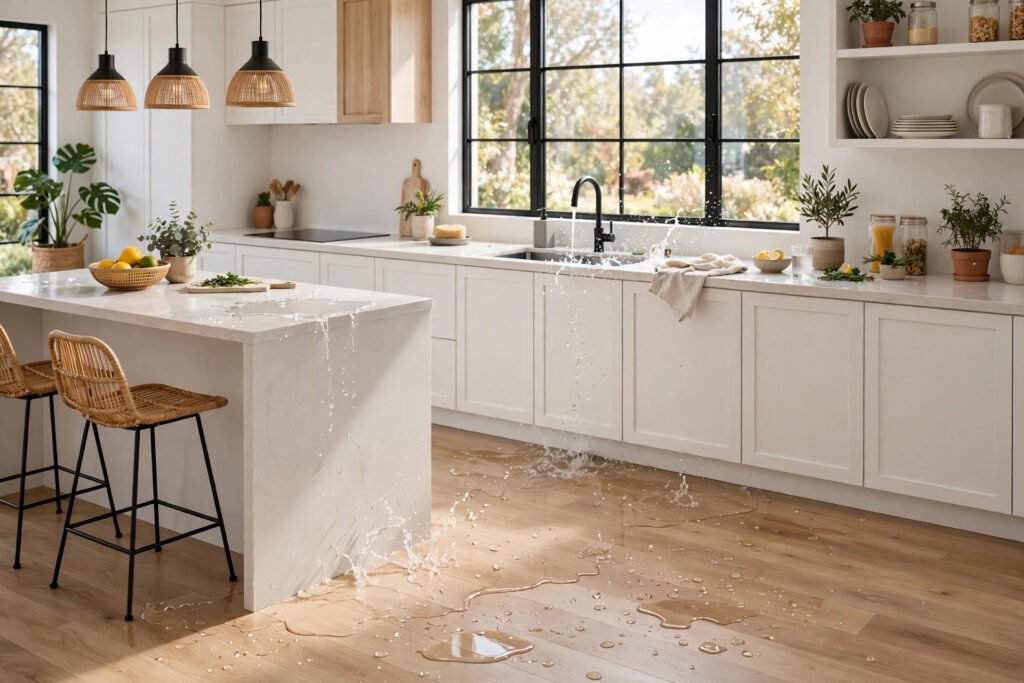
Every home has rooms where water is not an accident but a regular part of daily life. Kitchens splash, bathrooms steam, hallways welcome wet boots and muddy paws, utility rooms handle washing machines and damp laundry, and porches take the worst of the weather before anyone reaches the living room. In those rooms, choosing a floor on looks alone is a gamble, because a beautiful floor that cannot cope with water will swell, stain, lift or lose its finish far sooner than it should.
Waterproof flooring is designed for exactly those rooms. This general guide explains what the term really means, the main types of waterproof flooring available, which type suits which room, how to prepare the subfloor, how fitting works, and how to care for the floor once it is down. It covers waterproof flooring as a whole, rather than any single material or pattern, so you can compare your options fairly and choose the right floor for the wettest rooms in your home.
What Does Waterproof Flooring Really Mean?
The word waterproof is used loosely in flooring, and understanding what it actually promises will save you from disappointment. In practical terms, a waterproof floor is one whose planks, tiles or sheets are not damaged by water itself: the material does not absorb water, swell or warp when it gets wet, in the way that a fibreboard core or untreated timber would. That is a genuine and valuable quality, and it is the reason waterproof floors are recommended for kitchens, bathrooms and utility rooms.
It does not, however, mean that water can be left standing on the floor indefinitely, or that a badly fitted floor will protect everything beneath it. Water can still find its way through loose joints, gaps at edges or unsealed trims to the subfloor below, and prolonged standing water can damage adhesives, underlay or the subfloor itself even when the surface material survives. A truly successful waterproof floor is therefore a combination of a water-resistant material, tight fitting, sealed edges and sensible habits: wipe up major spills, deal with leaks promptly, and do not treat the floor as a substitute for plumbing maintenance.
It is also worth distinguishing waterproof from water-resistant. A water-resistant floor copes with splashes and spills that are wiped up reasonably promptly, but it is not designed for regular or prolonged wetting. A waterproof floor goes further, tolerating frequent wetting, steam and mopping without harm to the material itself. If your room is a bathroom, a utility room or a kitchen where water regularly reaches the floor, that distinction matters, and it should be the first question you ask about any product that claims to handle water.
The Main Types of Waterproof Flooring
Vinyl flooring is the most widely used waterproof option, and it comes in several forms. Luxury vinyl tile and luxury vinyl plank, often shortened to LVT and LVP, are flexible vinyl products made from layered PVC with a printed design and a protective wear layer. Stone plastic composite, or SPC, is a rigid-core form of vinyl, with a limestone and PVC core that makes the plank stiffer, more stable and easier to click together as a floating floor. Sheet vinyl, supplied in rolls, covers a room with very few joins, which is a real advantage in wet rooms, because fewer seams mean fewer routes for water to reach the subfloor.
Each vinyl form has its own strengths. Flexible LVT and LVP, usually glued down, follow the subfloor closely and give a very stable, quiet result, but they demand a smooth, well-prepared base, because imperfections can show through the thin material. Rigid SPC click flooring is more forgiving of minor subfloor unevenness, faster to fit, and easier to repair by lifting a plank, but it relies on the tightness of its locking system to keep joints sealed. Sheet vinyl avoids most joint concerns altogether, yet it needs careful measuring, cutting and fitting in one piece, and a damaged section is harder to repair discreetly than a single plank.
Tile remains the classic waterproof floor, and for good reason: ceramic and porcelain tiles do not absorb water, cope with steam and splashes effortlessly, and suit bathrooms and utility rooms where wetting is constant. Their drawbacks are coldness underfoot, hardness that makes dropped items more likely to break, and grout lines that need cleaning and occasional resealing. Engineered waterproof options and specially treated laminate ranges also exist, offering a wood look with enhanced water resistance, but they should be judged on their specific construction and manufacturer guidance rather than on the waterproof label alone: a product that tolerates splashes is not the same as one built to live with daily wetting, and the distinction should be checked before it is laid in a bathroom or wet-prone utility room.
Rubber flooring and resin-based floors are less common in homes but worth knowing about for utility rooms, home gyms and workshops, where durability and grip matter more than a domestic look. Rubber is naturally water-resistant, soft and grippy when wet, while poured resin creates a seamless, waterproof surface with no joints at all. Neither suits every room in a home, but in a hard-working utility space they can be practical choices that a more decorative floor would struggle to match.
Waterproof Flooring by Room
Kitchens are the most common reason homeowners choose waterproof flooring, and the demands there are clear: cooking splashes, dropped liquids, frequent mopping, heavy foot traffic and furniture that is moved for cleaning. Vinyl in plank, tile or sheet form suits kitchens well, because it copes with splashes, feels warmer and quieter than tile, and is easy to clean after cooking. Choose a wear layer suited to a busy household, a design that does not show every crumb, and a surface with enough texture for grip when damp, and the kitchen floor will handle daily life without constant worry.
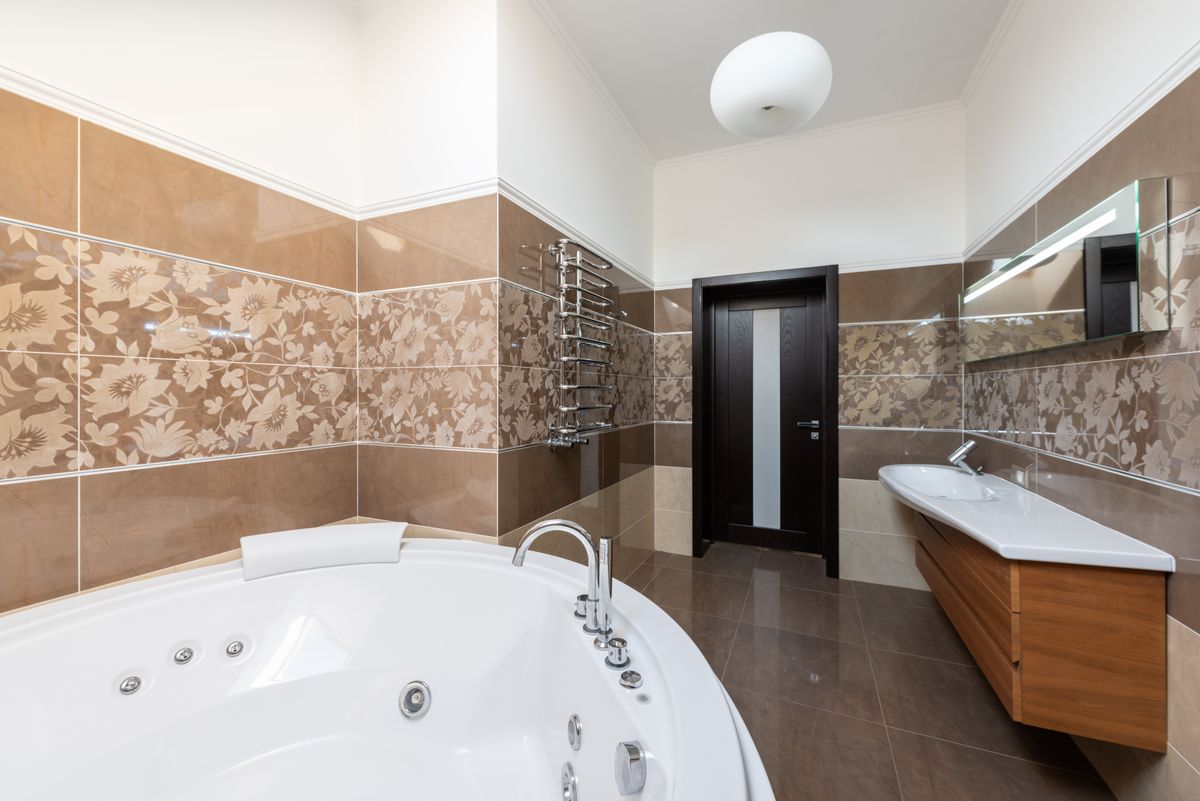
Bathrooms place different demands on a floor. Steam, splashes from baths and showers, bare wet feet and cleaning products all test the surface, and warmth underfoot matters more here than in any other room. Vinyl and tile both cope with bathroom conditions, with vinyl offering a warmer, softer feel and tile offering the most uncompromising water resistance. Whichever you choose, pay close attention to sealing around baths, shower trays, basins and toilets, because those junctions are where water most often escapes beneath a floor. A floor that is waterproof in the middle of the room but unsealed at its edges is not truly waterproof in practice.
Hallways, porches and utility rooms are often overlooked, yet they are among the wettest rooms in a home. Wet boots, umbrellas, muddy paws and washing machines all bring water to these floors, and a waterproof surface here protects not only the floor itself but the rooms beyond it. A durable vinyl or tile floor in a hallway is easy to mop after bad weather, copes with grit that would scratch a softer floor, and does not hold on to damp the way carpet does. In a utility room, the same qualities matter even more, because leaks from appliances, however infrequent, can cause serious damage to a water-sensitive floor before they are noticed.
Living rooms, bedrooms and dining rooms rarely need a fully waterproof floor, and choosing one there is usually a matter of lifestyle rather than necessity. An open-plan living space that flows directly into a kitchen, a ground-floor room with an external door that is used daily, or a home with dogs that come in wet from the garden may all benefit from a waterproof surface extending beyond the kitchen itself. In those cases, using the same waterproof floor across the open-plan space avoids awkward thresholds and creates a continuous, easy-to-clean surface, even if the living area itself would have coped with a less water-resistant floor.
Preparing the Subfloor for Waterproof Flooring
Subfloor preparation is where waterproof floors succeed or fail, and it deserves as much attention as the choice of material itself. The subfloor must be clean, dry, flat, stable and free of old adhesive lumps, loose material and protruding fixings, because an uneven base can cause joints to open, planks to flex and thin vinyl to show imperfections through to the surface. Over concrete, a moisture check is essential: damp rising from below can affect adhesives and underlay even when the new floor itself is waterproof, and a suitable damp-proof barrier may be needed before fitting begins.
Over timber, check for loose boards, movement and damaged sections, and secure or replace anything that moves, because a floor that flexes underneath will eventually break the joints of the floor above it. In rooms where water is expected, it is also worth thinking about falls and drainage: a bathroom floor should direct any spilled water away from walls and towards a drain or an area where it can be mopped up, rather than pooling in a corner. This is not always achievable in an existing home without major work, but even small improvements to levels and sealing at edges make a real difference to how a waterproof floor performs over time.
Allow the new flooring to acclimatise in the room where it will be laid before fitting, so that it settles to the temperature and humidity of the space, and measure the room carefully, including doorways, alcoves, pipes and fittings. Plan where joins will fall, how the floor will meet thresholds and adjoining rooms, and where expansion gaps will be hidden by skirting or beading. Removing old flooring creates waste that needs planning, because adhesives, old vinyl and underlay cannot always be disposed of in the usual way, so arrange disposal before demolition day rather than leaving piles of old flooring in the way of the new one.

Fitting Waterproof Flooring
Fitting methods vary by type, and each suits different rooms and skill levels. Glue-down vinyl is stuck directly to the prepared subfloor, plank by plank or tile by tile, giving a stable, quiet and tightly sealed result that is particularly valuable in bathrooms and kitchens, where water protection at the joints matters most. It demands patience, a near-perfect subfloor and careful adhesive work, and it is usually best left to a professional fitter, especially in a room with many fittings or an unusual shape.
Click-lock vinyl, usually rigid SPC, floats over the subfloor on underlay, with planks locking together without adhesive. It is faster to fit, more forgiving for a confident DIYer, and simpler to repair, because a damaged plank can often be lifted and replaced. The trade-off is a greater reliance on the locking system to keep joints tight against water, and a slightly higher floor height that may need attention at doorways and thresholds. Sheet vinyl, meanwhile, is laid as a single piece, cut to fit the room and often loose-laid or lightly adhered in smaller rooms, giving the fewest joins of any vinyl option, but requiring careful handling of a large, unwieldy sheet.
Tile fitting is a separate skill, involving adhesive, spacers, cutting around fittings and grouting, followed by sealing of grout lines where recommended. It is slower and messier than vinyl fitting, but it produces a floor with outstanding water resistance and longevity in the wettest rooms. Whichever method you choose, expansion gaps around the perimeter, careful sealing at baths, showers and doorways, and tight, well-aligned joints are not optional extras: they are what turn a waterproof material into a waterproof floor in the room where you actually live.
Choosing the Right Waterproof Floor for Your Home
Choosing well starts with an honest assessment of how wet the room really gets. A kitchen that sees daily cooking splashes needs a different level of protection from a bathroom where water regularly reaches the floor, and a hallway that takes wet boots in winter needs durability and easy cleaning more than it needs a floor that could survive a flood. Match the product to the room’s actual conditions, not to a worst-case scenario that will never happen, and not to an optimistic hope that a splash-prone room will somehow stay dry.
Look beyond the waterproof claim to the details that determine everyday satisfaction: the thickness and quality of the wear layer, which governs scratch and stain resistance; the surface texture, which affects grip when wet; the colour and design, which determine how well the floor hides dirt and water marks between cleans; and the manufacturer’s guidance on underfloor heating, cleaning products and fitting methods. A floor that looks perfect in a showroom but is slippery when wet, or that cannot be used with your heating system, is not the right floor for your room, however impressive its waterproof rating may be.
It is also helpful to compare waterproof flooring with the floors you might choose for drier rooms, so that thresholds and transitions feel intentional rather than accidental. A hard, patterned floor for a dry living room, for example, offers a very different feel from a waterproof vinyl, and seeing that contrast can clarify your priorities: if you love the firm timber feel and bold pattern of herringbone laminate flooring in a living room, you may still want a waterproof vinyl in the kitchen that flows from it, with a neat threshold strip joining the two. Similarly, a patterned vinyl in a wet room brings its own character: herringbone vinyl flooring shows how a waterproof vinyl material can carry a classic zigzag design into kitchens and bathrooms, and comparing a patterned option with a plain plank or sheet helps you decide whether you want the wet room to make a statement or simply to work quietly in the background.
Caring for Waterproof Flooring
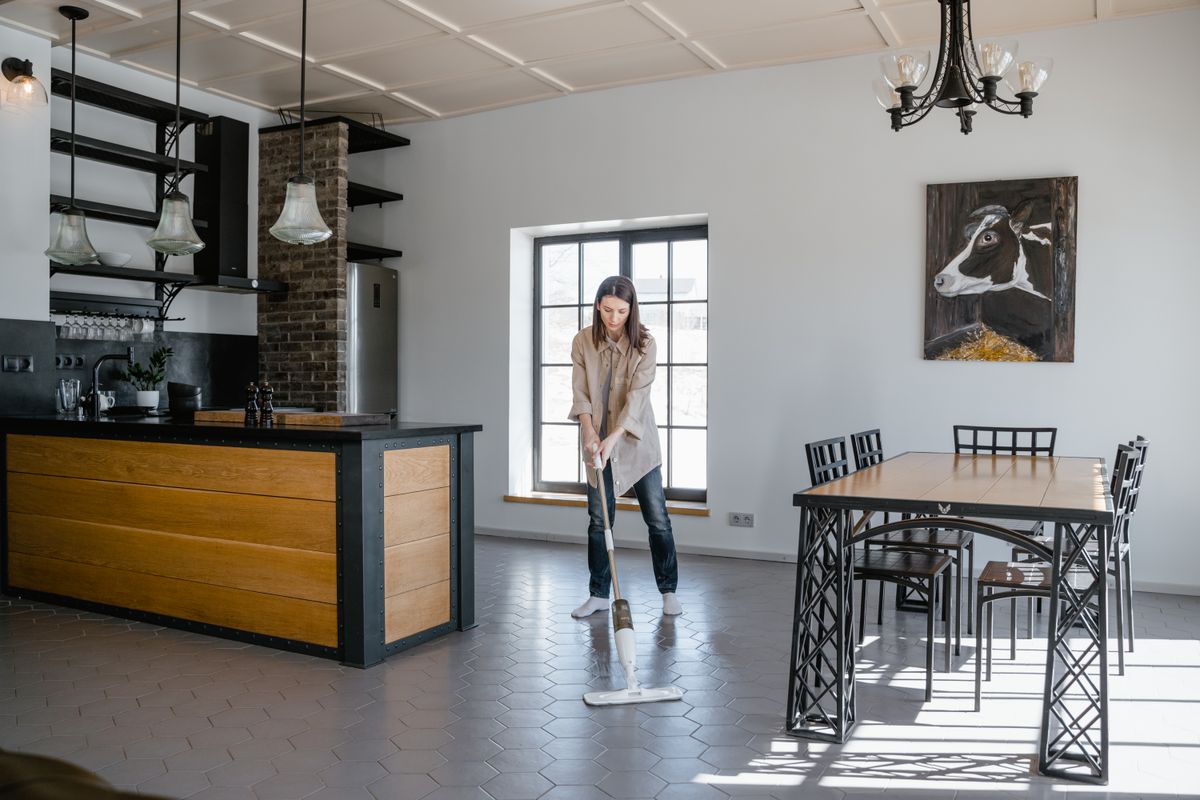
Waterproof flooring is among the easiest floors to maintain, which is a large part of its appeal in kitchens and bathrooms. Sweep or vacuum regularly to remove grit before it dulls the surface, then damp-mop with a cleaner recommended for the material. Unlike a water-sensitive floor, a waterproof vinyl or tile floor tolerates a damp mop well, and most spills can be wiped up without urgency, although cleaning them promptly still keeps the floor looking its best and prevents stains from setting into grout or textured surfaces.
Avoid abrasive scourers, harsh solvents and wax-based polishes not designed for your floor, which can dull the wear layer or leave a build-up that attracts dirt. For stubborn marks, a small amount of cleaner on a soft cloth is usually enough, and grout lines in tiled floors benefit from occasional dedicated grout cleaning and resealing where the manufacturer recommends it. Steam mops should be used with caution: many vinyl manufacturers advise against them, since sustained heat can affect adhesives or locking systems, so check your product’s guidance before using one, even on a floor that copes happily with hot water from a mop bucket.
Long-term care is mostly about the details around the floor rather than the surface itself. Check seals around baths, showers and basins from time to time, and renew any sealant that has cracked or pulled away, because a failed seal is the most common route for water to reach the subfloor. Keep felt pads under furniture feet, lift rather than drag heavy items, and keep a few spare planks or tiles from the original batch, so that a damaged piece can be replaced with a matching one rather than leaving a visible patch in the middle of the room.
Common Mistakes to Avoid
The most common mistake with waterproof flooring is assuming that a waterproof label removes the need for careful fitting. A waterproof plank fitted with loose joints, unsealed edges or a gap at the bath is not a waterproof floor, and water will find those weaknesses long before it damages the material itself. Tight joints, sealed edges and proper thresholds are what make the system work, and skimping on them undoes the benefit of choosing a waterproof product in the first place.
Other mistakes are equally avoidable. Laying a thin vinyl over a rough subfloor guarantees that imperfections will show through, skipping an expansion gap can cause a floating floor to peak or buckle, and using the wrong cleaner can dull a surface that would otherwise have lasted for years. Choosing a floor for a wet room on appearance alone, without checking its wear layer, slip resistance and heating compatibility, is another frequent error, as is leaving standing water or an unnoticed appliance leak to sit for days. Waterproof flooring forgives a great deal, but it does not forgive neglect, and a few simple habits will protect your investment far better than any single product feature.
Frequently Asked Questions
Is waterproof flooring really fully waterproof?
The material itself in a genuinely waterproof floor does not absorb water or swell when wet, which is a real advantage over water-sensitive floors. That does not mean water can be left standing indefinitely, or that a badly fitted floor will protect the subfloor beneath it. Tight joints, sealed edges and prompt clean-up of major spills are still essential, and leaks from appliances or plumbing should always be dealt with quickly.
Which waterproof flooring is best for a bathroom?
Both vinyl and tile suit bathrooms well, and the best choice depends on your priorities. Tile offers the most uncompromising water resistance and longevity, while vinyl offers a warmer, softer and quieter surface that is more forgiving under bare feet. Sheet vinyl has the fewest joins, which helps in a wet room, while click vinyl is easier to fit and repair. Whichever you choose, sealing around baths, showers and basins matters as much as the material itself.
Can waterproof flooring be used with underfloor heating?
Many waterproof vinyl and tile products are compatible with underfloor heating, but you must check the specific product’s guidance and the heating system’s requirements, and bring the system up to temperature gradually. Temperature limits and heating types vary between products, so do not assume that every waterproof floor suits every heating system without confirming it for the product you intend to buy.
Is waterproof flooring slippery when wet?
Slip resistance varies by product and surface texture, and it should be checked before choosing a floor for a bathroom, kitchen or hallway where wet feet are common. Textured or embossed surfaces generally offer more grip than highly polished ones, and mats in key spots, such as by the bath, shower and external doors, add safety. If grip is a priority for your household, ask about slip ratings and choose a textured finish rather than relying on appearance alone.
How do I clean waterproof flooring?
Regular sweeping or vacuuming followed by a damp mop with a cleaner recommended for your floor type will deal with almost all everyday dirt. Avoid abrasive scourers, harsh solvents and unsuitable polishes, clean grout lines in tiled floors as needed, and check seals around baths and showers from time to time. With that simple routine, a waterproof floor will stay clean and smart with far less effort than a water-sensitive floor in the same room.
Conclusion
Waterproof flooring is not a single product but a practical approach to the wettest rooms in the home: choose a material that does not absorb water, fit it tightly with sealed edges, prepare the subfloor properly, and look after it with simple, regular care. Done well, it removes the anxiety that comes with a water-sensitive floor in a kitchen, bathroom, hallway or utility room, and it lets those rooms be used fully, without tiptoeing around splashes, steam and wet boots.
Start from the room itself, how wet it really gets, how it is used and who uses it, then choose the type, wear layer and surface texture that match those conditions, rather than choosing on pattern or price alone. With the right floor in the right room, fitted and sealed properly, you will have a surface that copes with daily water, cleans easily and looks good for years, leaving you free to enjoy the room instead of worrying about the floor beneath your feet.



More Stories
Cushion Flooring: A Complete UK Guide to Soft, Comfortable Floors
Waterproof Laminate Flooring: A Complete UK Guide to Water-Resistant Laminate Technology
LVT Herringbone Flooring: A Complete UK Guide to Glue-Down Luxury Vinyl Tile