

Some floors look impressive the moment you walk into a room, and others win you over more quietly, by how they feel when you stand on them barefoot in the morning, sit on them with children, or spend a long stretch of time cooking in the kitchen. Cushion flooring belongs firmly in that second group. It is chosen less for drama and more for everyday comfort, warmth and kindness to feet, joints and dropped objects alike, and in the right room it can transform how a space is actually used rather than simply how it photographs.
This guide explains what cushion flooring really is, why it feels different from harder floors, where it works best and where it does not, how to prepare for it and fit it, and how to keep it looking good with simple routine care. If you are weighing up a soft, forgiving floor against a firmer timber-effect option, the comparisons and room-by-room guidance below will help you decide on comfort, practicality and appearance together, rather than on any one of those qualities alone.
What Is Cushion Flooring?
Cushion flooring is a resilient floor covering with a soft, padded layer built into its construction, most commonly found in cushioned vinyl flooring. Unlike a hard plank that sits directly on a thin underlay, cushioned vinyl carries a foam or felt backing that gives the surface a gentle spring when you step on it. The visible top layer carries the design, which may imitate wood, stone or tile, or may use a plain, patterned or textured finish in its own right, while the cushioned backing underneath does the quiet work of softening footsteps, absorbing small impacts and making the floor feel warmer to the touch.
That construction is what sets cushion flooring apart from many other resilient floors. A standard vinyl plank can be practical and water-resistant, yet still feel firm and unyielding underfoot. Cushion flooring deliberately trades a little of that firmness for comfort, and the difference is noticeable as soon as you compare the two side by side. It is also distinct from carpet, which is softer still but far harder to clean after spills, and from a hard timber-effect floor, which looks warm but offers no give at all. Cushion flooring sits in a useful middle ground: a smooth, wipe-clean surface that still feels gentle to walk, sit and play on.
Cushion flooring is usually supplied in sheet form, in rolls that are cut to fit the room, although cushioned tiles and planks with padded backings are also available. Sheet cushion flooring has the advantage of very few joins, which helps with both appearance and cleaning, because there are fewer seams for dirt and moisture to settle into. Tiles and planks, by contrast, are easier to handle in smaller rooms or awkward shapes, and a single damaged piece can often be replaced without disturbing the rest of the floor. The right format depends on the shape of your room, your confidence as a fitter, and whether you value a seamless look or easier repair most highly.
What Makes Cushion Flooring Feel Different Underfoot
The defining quality of cushion flooring is the way it responds to pressure. When you stand on it, the padded backing compresses slightly and then recovers, so footsteps feel softer and quieter than they do on a hard surface. That softness matters most in rooms where people stand for long periods, such as kitchens, where cooking, washing up and preparing meals can otherwise leave feet and legs aching on an unforgiving floor. It also matters in bedrooms and playrooms, where children sit and play on the floor itself, and where a softer landing makes everyday tumbles less dramatic.
Comfort is closely linked to warmth. A cushioned backing acts as a mild insulating layer between your feet and the cold subfloor beneath, so the floor feels less chilly in winter than tile or a hard plank laid directly on concrete. That warmth is one reason cushion flooring remains popular in older homes with solid floors, in ground-floor rooms and in flats where the floor below can draw heat away. It will not replace proper heating or insulation, but it does take the edge off a cold morning, and for many households that small daily comfort is reason enough to choose it.
Noise is another everyday benefit that is easy to overlook until you live with the alternative. Hard floors can amplify footsteps, dropped toys and dragged chairs, especially in upstairs rooms or flats where sound travels to the rooms below. The cushioned layer absorbs some of that impact sound, making the room itself quieter and reducing disturbance for neighbours and other members of the household. In a busy family home, that quieter quality can make a room feel calmer and more restful, even when the household itself is anything but quiet.
Where Cushion Flooring Works Best in the Home
Cushion flooring is at its best in rooms where comfort, easy cleaning and a forgiving surface matter more than a formal or prestige finish. Bedrooms are a natural home for it, because the soft surface suits bare feet first thing in the morning and provides a comfortable base for dressing, reading and relaxing. Children’s bedrooms and playrooms benefit even more, since the floor doubles as a play surface, and the cushioning softens the impact of toys, games and the occasional fall from a low bed or chair.
Kitchens are another strong setting, provided the product chosen is suitable for a room where spills and splashes are routine. Standing for long periods while cooking is far more comfortable on a cushioned surface, and dropped plates, cups and utensils are less likely to shatter or chip the floor. The smooth, wipe-clean surface also suits a room where food preparation and family life overlap, because crumbs, spills and muddy footprints can be dealt with quickly rather than worked out of fibres or joints.
Hallways, utility rooms and small cloakrooms can also suit cushion flooring, particularly where a warm, quiet and easy-to-clean surface is wanted at the entrance to the home. In a hallway, the cushioning softens the constant traffic of shoes and boots, while the wipe-clean surface copes with wet weather far better than carpet. For anyone who finds hard floors tiring to stand on, or who lives with sore feet, stiff joints or mobility difficulties, the gentler surface throughout these everyday rooms can make a genuine difference to daily comfort, and that practical benefit should weigh heavily in the decision.
Cushion Flooring in Kitchens, Bathrooms and Play Spaces
In kitchens, the priorities are comfort, cleaning and resistance to the spills that are part of cooking. Cushion flooring meets those priorities well, but it is worth choosing a design and finish that hides everyday marks, because a very pale or highly polished surface will show every splash and crumb in a working kitchen. A mid-tone wood effect, a stone effect or a subtle pattern will look smart for longer between cleans, and a textured surface can help with grip when the floor is damp. Keep a mat by the sink and cooker, wipe up spills promptly, and the floor will stay both comfortable and presentable.
Bathrooms need a more careful judgement. Cushion flooring can work in a bathroom where splashes are occasional and the floor is kept reasonably dry, and its warmth is welcome in a room that is often cold underfoot. It is not, however, the same as a fully waterproof tile floor in a wet room, and it should not be laid where water regularly pools or where a shower sprays directly onto the floor. Check that the product is recommended for bathroom use, pay close attention to sealing around baths, basins and toilets, and wipe up standing water rather than leaving it to sit. In a family bathroom with children splashing at bath time, that routine matters more than the product choice itself.
Play spaces show cushion flooring at its most useful. A nursery, playroom or family living room used for floor play benefits from a surface that is soft enough to sit on for long periods, easy to clean after painting, snacks and craft activities, and forgiving when toys are dropped or dragged across it. Unlike carpet, it will not hold on to paint, food or mud, and unlike a hard floor, it will not punish knees and elbows during play. A cheerful pattern or a warm wood effect can suit the room without turning it into a purely functional space, and rugs can still be layered on top for extra softness in reading corners.
Choosing the Right Cushion Flooring for Your Room
Choosing cushion flooring starts with how the room is used, not with the pattern book. A quiet bedroom can suit a softer, plusher cushion, while a busy kitchen or hallway needs a tougher surface that still offers comfort but will not mark easily under shoes, chair legs and pet claws. Look at the wear layer, which is the clear protective coating over the design, and ask how it is intended to cope with your household: a home with pets and children needs a more robust surface than a spare room used occasionally, even if both rooms would enjoy the same soft feel.
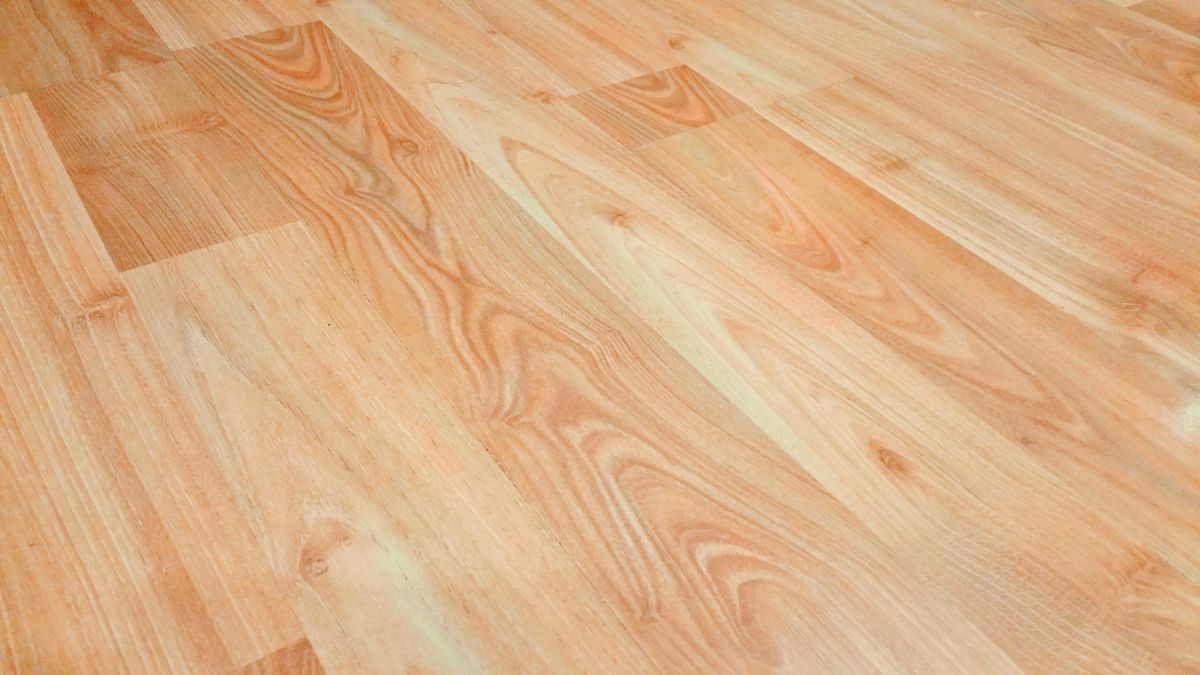
Appearance deserves just as much thought, because cushion flooring will cover a large area and set the tone for the whole room. Wood-effect designs bring warmth and familiarity, stone and tile effects bring a cooler, more contemporary feel, and plain or patterned finishes can lift a small room or calm a busy one. Take samples home and look at them in the room itself, in daylight and in evening light, and walk on them in bare feet if you can, because a sample viewed on a shop counter tells you very little about how the floor will feel and look once it fills the room. If your heart is set on a striking patterned floor rather than a soft one, it is worth comparing the feel as well as the look: a patterned hard floor such as herringbone laminate flooring offers a very different experience underfoot, with a firm timber-like feel and a bold zigzag design, and seeing the contrast helps clarify whether comfort or pattern matters most to you.
Practical details also shape the choice. Think about how the floor meets doorways, thresholds and adjoining rooms, because a cushioned sheet is thicker than some hard floors and may need a threshold strip or a small adjustment to a door. Think about furniture, too: heavy items should sit on protective pads or coasters so that their weight is spread and does not leave lasting dents in the cushioning, and furniture that is dragged regularly should be lifted rather than pulled. None of these points should put you off, but planning for them before ordering avoids the small frustrations that can spoil an otherwise successful floor.
Preparing the Subfloor and the Room
Good preparation matters for cushion flooring just as it does for any floor, even though the padded backing forgives small imperfections better than a thin, hard plank. The subfloor should be clean, dry, smooth and stable, with old adhesive, loose material and sharp ridges removed, because anything left underneath can eventually show through the soft surface or wear through it from below. Concrete floors may need a moisture check and, where damp is present, a suitable barrier before the new floor goes down, while timber floors should be checked for loose boards, protruding fixings and movement that could telegraph through over time.
Room preparation is straightforward but worth doing properly. Remove furniture and old floor coverings, sweep and vacuum thoroughly, and allow the new flooring to acclimatise in the room where it will be laid, so that it settles to the temperature and humidity of the space before fitting. Measure the room carefully, allowing for doorways, alcoves and fittings, and plan where joins will fall if you are using tiles or planks, or how a sheet will be laid out if you are using a roll. A little time spent on measuring and planning at this stage saves waste, awkward cuts and visible joins later, and it makes the fitting itself far less stressful.

Installing Cushion Flooring
Installation depends on the format you have chosen. Sheet cushion flooring is often loose-laid in smaller rooms, where its own weight and the grip of the backing hold it in place, with adhesive or double-sided tape used at edges and joins for security. In larger rooms, or where the floor will see heavy traffic, a full adhesive fitting gives a more stable and longer-lasting result, because the sheet cannot shift, ripple or lift at the edges. Whichever method is used, the sheet should be laid flat, smoothed out from the centre towards the edges to remove air, and trimmed carefully at walls and fittings so that it sits neatly without stretching or bunching.
Tiles and planks with cushioned backings are fitted piece by piece, which makes them easier to handle in awkward rooms and simpler to repair later, but they demand careful alignment so that joins stay tight and patterns line up. Start from a planned centre line or a straight wall, work methodically across the room, and check alignment regularly rather than discovering a drift at the far wall. If you are comparing fitting methods, it is useful to see how a different resilient floor is handled: herringbone vinyl flooring is fitted in a zigzag pattern that demands careful planning of its own, and the contrast shows why a straightforward sheet or plank layout can be a calmer project for a first-time fitter.
A confident DIYer can fit cushion flooring in a straightforward, square room, but a professional fitter is worth considering for large rooms, rooms with many doorways or curved fittings, and any room where a seamless sheet finish matters. A professional will also handle subfloor smoothing, adhesive choice and trimming around complex fittings with an ease that is hard to match on a first attempt. If you do fit it yourself, take your time, keep the room warm and dry during fitting, and do not rush the trimming: a neat edge hidden by skirting or beading looks far better than a hurried cut that leaves gaps or overlaps.
Everyday Care and Cleaning
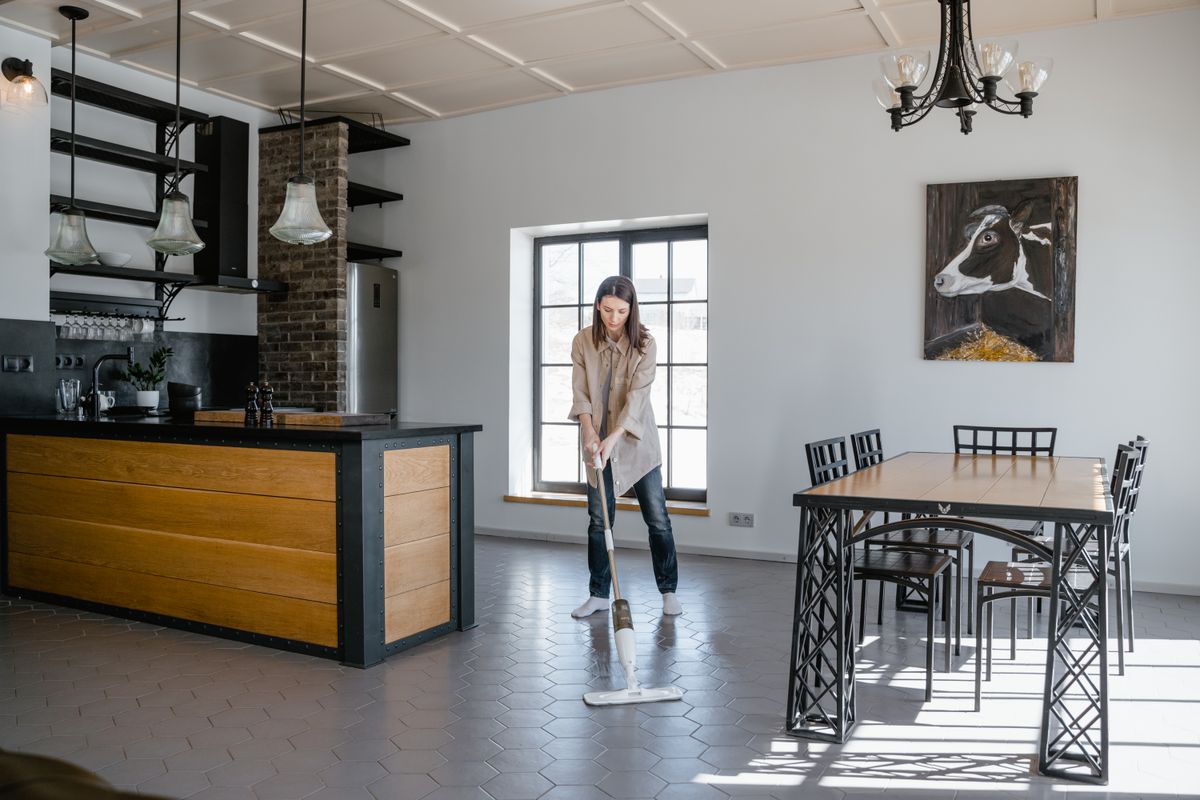
One of the great attractions of cushion flooring is how simple it is to look after day to day. Regular sweeping or vacuuming with a hard-floor setting removes grit and dust before they can dull the surface, and a damp mop with a mild, floor-safe cleaner deals with most spills and marks. Because the surface is smooth and the joins in sheet flooring are few, there are few places for dirt to hide, and a kitchen or hallway floor can be brought back to looking fresh in a matter of minutes rather than after a lengthy cleaning session.
A few habits will keep the cushioning itself in good condition. Wipe up spills promptly, even though the surface copes well with them, because liquids left sitting can eventually find their way to edges and joins. Use mats at entrances to catch grit and wet shoes, place felt pads under furniture feet, and lift rather than drag heavy items. Avoid abrasive scourers and harsh solvents, which can dull the wear layer and spoil the design, and avoid wax-based polishes that are not designed for cushioned vinyl, since they can leave a build-up that attracts dirt and makes the floor look dull rather than clean.
Stains and scuffs should be dealt with gently rather than aggressively. Most everyday marks lift with a soft cloth and a little mild cleaner, applied to the cloth rather than poured onto the floor, and stubborn shoe marks often respond to gentle rubbing rather than scrubbing. If a sheet floor is damaged, a small repair may be possible, but a larger tear or burn is harder to disguise than a damaged plank that can simply be swapped, which is one reason to keep offcuts from installation: a matching piece can be invaluable for a discreet repair, and it costs nothing to store flat in a dry place.
Common Mistakes to Avoid
The most common mistake with cushion flooring is laying it over a poorly prepared subfloor and assuming the padding will hide everything. The cushioning forgives minor unevenness, but it cannot hide sharp ridges, loose adhesive or protruding fixings, and those faults will eventually show through or wear the floor from beneath. Taking the time to clean, smooth and check the subfloor is the single most effective step towards a floor that looks good for years rather than months.
Other mistakes are equally avoidable. Skipping acclimatisation can lead to movement after fitting, fitting a sheet too tightly to the walls leaves no room for natural expansion, and choosing a very soft cushion for a heavy-traffic hallway can lead to dents and wear that a tougher product would have resisted. Using the wrong cleaner, leaving standing water in a bathroom, and dragging furniture without pads all shorten the life of the surface in ways that are easy to prevent. Finally, ordering without measuring carefully, or without allowing for doorways and waste, can leave a room short of material at the worst possible moment, so measure twice and keep a little spare.
Frequently Asked Questions
Is cushion flooring suitable for kitchens?
Yes, cushion flooring suits many kitchens, because it is comfortable to stand on for long periods, easy to wipe clean after cooking, and forgiving when items are dropped. Choose a product recommended for kitchen use, pick a mid-tone or patterned design that hides everyday marks, use a mat by the sink and cooker, and wipe up spills promptly to keep the floor looking its best.
Is cushion flooring warmer than laminate or tile?
In everyday use, cushion flooring generally feels warmer underfoot than tile or a hard laminate plank, because its padded backing insulates your feet from the cold subfloor beneath. It will not warm a room on its own, and it is no substitute for heating or insulation, but for bare feet in a bedroom, bathroom or kitchen, the difference in comfort is noticeable, especially in colder months.
Can cushion flooring be laid over an existing floor?
It depends on the condition and type of the existing floor. A smooth, firm, dry and stable surface may be suitable, but a damaged, uneven, damp or soft existing floor should be removed or properly prepared first, because faults underneath will eventually affect the new floor. If you are unsure, ask a fitter to assess the subfloor before ordering, rather than discovering a problem after the new floor is down.
How do I protect cushion flooring from furniture dents?
Spread the weight of heavy furniture with wide pads, cups or coasters under feet and legs, avoid narrow castors that concentrate pressure on a small area, and lift rather than drag furniture when moving it. Rearranging heavy items occasionally also helps, because a dent left by long-term pressure in one spot is harder to recover from than the gentle, even wear of normal use.
Is cushion flooring good for homes with pets and children?
Cushion flooring is a practical choice for busy family homes, because it is soft for children to play on, quiet underfoot, and easy to clean after pets and mealtimes. Choose a tougher wear layer for a household with pets and children, keep claws trimmed, sweep up grit regularly, and use mats at entrances to protect the surface from muddy paws and shoes.
Conclusion
Cushion flooring earns its place not by making a grand statement, but by making everyday life a little more comfortable: softer mornings in the bedroom, kinder hours standing in the kitchen, quieter rooms upstairs, and a play surface that children can enjoy without worry. It combines that comfort with a smooth, wipe-clean surface that suits busy households, and with designs that range from warm wood effects to fresh contemporary patterns, so comfort does not have to mean compromise on appearance.
Choose it for the rooms where you live on the floor rather than simply walk across it, prepare the subfloor properly, pick a wear layer suited to your household, and look after it with simple, regular cleaning and a few protective habits. Do that, and cushion flooring will reward you daily in the most understated way a floor can: by feeling good every single time you step onto it.




More Stories
Waterproof Laminate Flooring: A Complete UK Guide to Water-Resistant Laminate Technology
LVT Herringbone Flooring: A Complete UK Guide to Glue-Down Luxury Vinyl Tile
Herringbone Vinyl Flooring: A Complete UK Guide to Waterproof Styles, Fitting and Care