
What Is Laminate Underlay?
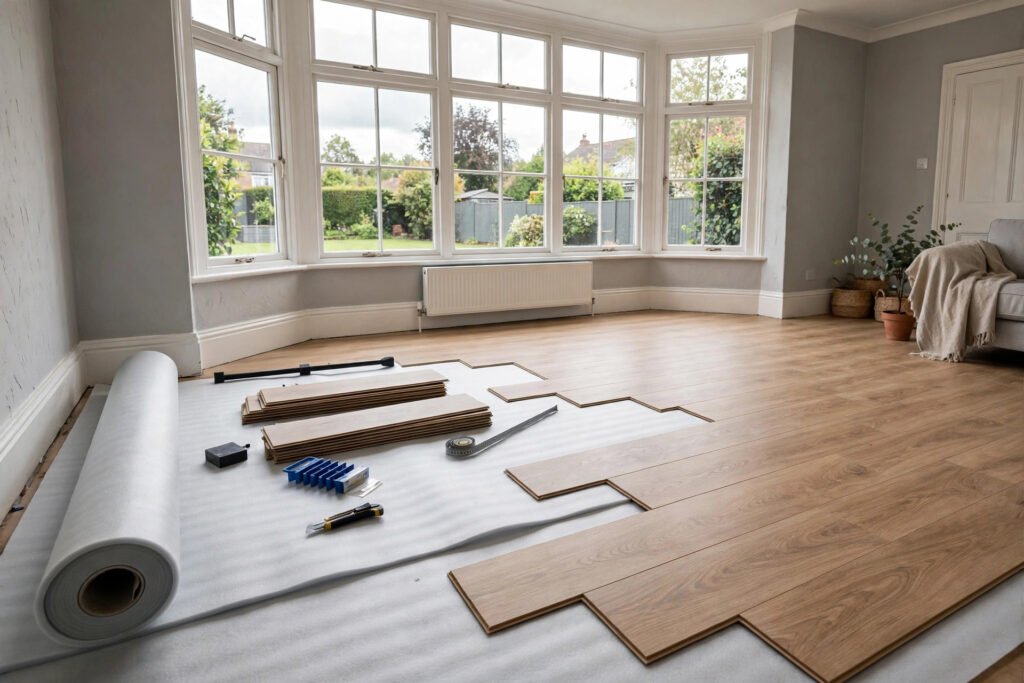
Laminate underlay is the thin layer that sits between your subfloor and your laminate planks. It is easy to overlook, because it disappears the moment the floor goes down, yet it quietly shapes almost everything about how the finished floor feels, sounds and lasts. Laminate is almost always laid as a floating floor, which means the planks click together and rest on the underlay rather than being glued or nailed to the ground beneath. That floating design is what makes laminate quick to fit and easy to replace, but it also means the underlay is doing far more work than a simple cushion. It smooths out tiny imperfections in the subfloor, softens footfall, adds a layer of insulation, and helps protect the click joints from the daily flexing that can wear them out over time.
Think of laminate and underlay as a pair rather than two separate purchases. A good laminate on the wrong underlay can feel hollow, sound noisy and wear at the joints, while a modest laminate on a well-chosen underlay can feel noticeably more solid and comfortable underfoot. Manufacturers often specify a suitable underlay type for a particular product, and following that guidance is a sensible starting point, especially where a guarantee is involved. The right choice depends on your subfloor, the room, whether anyone lives below you, whether you have underfloor heating, and how much moisture the room is likely to see.
Underlay comes in rolls or in fold-out sheets, and it is laid across the room before the first plank goes down. Some products include a built-in vapour barrier, some are designed mainly for sound reduction, and some are made from dense fibreboard or cork that add a firmer, more timber-like feel. Laminate with underlay already attached to the back of each plank is another option, and it changes the fitting process slightly, because there is no separate roll to lay. Understanding these differences before you order is far cheaper than discovering the wrong choice after the floor is down.

What Underlay Actually Does
The first job of underlay is levelling, in a small and practical sense. No subfloor is perfectly flat, and concrete, timber boards and old screed all carry minor dips, ridges and rough patches. Underlay bridges those small imperfections so the laminate sits evenly, rather than rocking or flexing over every bump. That matters because laminate click joints are strong when they are supported and far more vulnerable when a plank is allowed to bounce. A floor that flexes at the joints will creak, feel springy and, over time, can develop gaps or damaged locking profiles. Underlay does not replace proper subfloor preparation, and a badly uneven floor still needs levelling first, but it takes up the small irregularities that preparation alone cannot fully remove.
Sound is the benefit most people notice first. Laminate laid directly on a hard subfloor can sound hollow and drum-like, with every footstep echoing through the room. Underlay absorbs some of that impact sound in the room itself, making footsteps softer and less sharp, and it also reduces the sound that travels through the floor to the room below. That second effect, impact sound travelling downwards, is especially important in flats, where a noisy laminate floor can become a genuine neighbour issue. Some leases and building rules even require a particular standard of acoustic underlay, so it is worth checking before you buy if you live in a flat or a converted house.
Warmth and comfort come next. Underlay adds a layer of insulation between a cold subfloor, particularly concrete, and the laminate above it, so the floor feels less cold under bare feet and the room holds its warmth a little better. It also adds a subtle softness to the feel of the floor, taking the harsh edge off a hard surface without making it feel spongy. That balance matters: a floor that feels too soft can flex too much at the joints, while a floor with no give at all feels hard and unforgiving. A well-chosen underlay gives a comfortable middle ground, firm enough to support the joints and soft enough to walk on happily.
Moisture protection is the final major job, and it is the one most often forgotten until it is too late. Concrete subfloors can carry residual damp, and ground-floor rooms are more vulnerable than upper floors. An underlay with a built-in vapour barrier, or a separate damp-proof membrane laid beneath the underlay, stops that moisture reaching the fibreboard core of the laminate, where it could cause swelling and damage. Over a timber subfloor, moisture protection is usually less critical, but it still pays to check the condition of the boards and the ventilation beneath them before laying anything over the top.
The Main Types of Laminate Underlay
Foam underlay is the most common and most affordable type, and for many straightforward rooms it is entirely adequate. It is light, easy to cut and quick to lay, and it provides basic cushioning, sound softening and levelling. Foam underlay is available with or without a built-in vapour barrier, and the version with a barrier is the sensible choice over concrete. Its main limitation is durability under heavy use: in a busy hallway or a room with heavy furniture, a thin foam layer can compress over time, which reduces its cushioning and its sound-absorbing effect. For a quiet spare bedroom or a lightly used room, that is rarely a problem, but for a family living room it is worth considering a denser option.
Fibreboard underlay is denser and firmer than foam, and it gives a floor a noticeably more solid, timber-like feel. It is supplied as boards rather than rolls, which are laid in a brick pattern across the subfloor, and it is particularly good at smoothing out minor imperfections and reducing the hollow sound that laminate can have. Fibreboard is a popular choice for living rooms and bedrooms where comfort and a quality feel matter, and it copes well with everyday family traffic. It is, however, more vulnerable to moisture than foam or rubber, so it is not the best choice for a damp-prone room or over a concrete floor where moisture has not been properly dealt with.
Cork underlay sits in a similar firm, natural category to fibreboard, with the added advantages of good sound absorption and a degree of natural resilience. It is made from compressed cork granules, it feels pleasant underfoot, and it is a good choice for rooms where acoustics matter, such as a home office or a bedroom above a living space. Cork is also a renewable material, which appeals to homeowners who want a more sustainable fitting. Like fibreboard, it needs protection from moisture, and it is usually laid over a separate vapour barrier where damp could be an issue.
Rubber and combination underlays are the heavy-duty end of the range, designed where sound reduction is the priority. Rubber underlay is dense, durable and excellent at absorbing impact sound, which makes it a strong choice for flats and upper floors. Combination underlays pair a dense acoustic layer with a foam or felt top, giving both sound performance and comfort, and some include a built-in vapour barrier as well. These products cost more than basic foam, but in a flat, where a poor acoustic choice can cause real friction with neighbours, the extra outlay is often money well spent.
Finally, there is laminate with underlay already attached. Some laminate ranges come with a thin foam or cork layer bonded to the back of each plank, which saves a fitting step and guarantees that the underlay is compatible with the product. It is a convenient option, but it is worth checking whether additional underlay is still needed, particularly over concrete where a vapour barrier may be required, and whether the attached layer meets any acoustic requirements in a flat. Attached underlay does not automatically solve every subfloor problem, and it should not be treated as a reason to skip subfloor checks.
Choosing Underlay for Your Subfloor
Over concrete, moisture is the first question. Concrete can look dry and still carry damp, so a vapour barrier is usually essential, whether it is built into the underlay or laid as a separate membrane beneath it. A foam underlay with an integrated barrier is a simple, reliable solution for many concrete floors, while a combination acoustic underlay with a barrier suits a flat with a concrete floor where both moisture and sound matter. Whichever you choose, the barrier joints should overlap and be sealed according to the product guidance, because a barrier with gaps in it is barely a barrier at all.
Over timber boards, the priorities shift. Moisture is less of a concern, provided the boards are sound and the space beneath them is ventilated, but levelling and sound become more important, because old boards are rarely perfectly flat and they can creak on their own. A fibreboard or cork underlay works well here, smoothing the small gaps and ridges between boards and adding a firm, quiet feel. Before laying underlay over timber, it is worth screwing down any loose boards and checking for damaged sections, because underlay will hide a creak for a while but it will not fix a board that moves.
In flats and upper floors, acoustics should lead the decision. Look for an underlay designed for impact sound reduction, and check whether your lease, management company or building regulations set a particular requirement. A dense rubber or combination acoustic underlay is usually the safest choice here, and it is worth keeping the product details, because a neighbour complaint is much easier to answer when you can show that a proper acoustic layer was fitted. Skimping on underlay in a flat is a false economy that can cost far more in dispute and re-fitting than the saving was ever worth.
Underfloor heating adds another condition. Not every underlay suits a heated floor, because a thick, highly insulating layer can slow heat transfer and reduce the efficiency of the system. If you have underfloor heating, choose an underlay that the manufacturer states is suitable for heated floors, and check the same for the laminate itself. The same caution applies to water-resistant laminate: our guide to waterproof laminate flooring explains how water-resistant construction works, but even a water-resistant plank benefits from the right underlay and moisture barrier beneath it, particularly in a kitchen or hallway where spills are likely.
Thickness, Feel and Durability
It is tempting to assume that thicker underlay is always better, but that is not the case with laminate. A very thick, soft underlay can allow too much movement at the click joints, which stresses the locking profiles and can lead to gaps or breakage over time. Manufacturers usually state a suitable thickness range for their product, and staying within it is more important than chasing the softest feel in the shop. A moderate, dense underlay that supports the joints firmly will usually outlast a thick, soft one that lets the floor flex.
Feel is subjective, but it is worth testing honestly. If you can, stand on a sample of laminate laid over the underlay you are considering, rather than judging the underlay on its own. A good combination feels solid and quiet, with a slight give that takes the hardness off the surface, and it does not bounce or feel springy when you walk across it. A poor combination feels either drum-like and hollow or soft and unstable, and both sensations are warnings worth heeding before you commit to a whole room.
Durability follows from density and from fitting. A dense fibreboard, cork or rubber underlay holds its shape under furniture and foot traffic far longer than a thin foam layer, which is why it is often the better choice for a busy family room even though it costs more at the outset. Heavy furniture should still sit on felt pads or protective cups, because concentrated weight can compress any underlay over time and mark the laminate above it. Rotating rugs and keeping grit out of the house also help, because grit trapped underfoot grinds at the wear layer regardless of what lies beneath the planks.
Patterned floors deserve a mention here, because the underlay choice does not change when the layout does, but the fitting care does. If a herringbone layout appeals to you, our guide to herringbone laminate flooring explains the pattern in depth, and the same principles apply: a firm, even underlay gives the angled joints the support they need, while a soft, uneven one will show up quickly in a pattern where every joint is on display. The same logic holds for vinyl herringbone, covered in our guide to herringbone vinyl flooring, and for the luxury vinyl version in our guide to LVT herringbone flooring, although vinyl products have their own underlay requirements and should not be assumed to match laminate guidance.

Fitting Laminate and Underlay Step by Step
Preparation comes before any roll is unrolled. Clear the room, remove old carpet and loose material, and clean the subfloor thoroughly, because grit trapped under the underlay will be felt through the floor. Check the subfloor for flatness, and level any significant dips or humps, since underlay smooths small imperfections but cannot rescue a badly uneven floor. Check for damp, particularly over concrete, and deal with it before you proceed. Leave sealed packs of laminate in the room where they will be laid so the planks adjust to the temperature and humidity of the space, and check the manufacturer’s guidance on how long that acclimatisation should take.
Lay the underlay in rows across the room, usually at right angles to the direction the planks will run, and butt the edges neatly together without overlapping, unless the product guidance says otherwise. Tape the joints with the tape recommended for the product, because loose, curling edges will show as ridges through the laminate and can interfere with the click joints. If a separate vapour barrier is needed, lay that first, with overlapping, sealed joints, and then lay the underlay on top of it. Trim the underlay at the walls, leaving it slightly short of the skirting line, and keep it clear of doorways and transitions until the planks reach them.
Once the underlay is down, lay the laminate as a floating floor, clicking the planks together row by row and leaving an expansion gap around the perimeter, hidden by skirting or beading, to allow for seasonal movement. Work from a straight starting wall, keep the joints staggered in a pleasing, random pattern, and use a tapping block and pull bar rather than striking the planks directly, which can damage the click profiles. Cut planks with a suitable saw, and keep offcuts for testing finishes or for small repairs. If you are laying laminate with attached underlay, follow the same floating method, but check whether an additional vapour barrier is still needed beneath it.
Finishing details make the difference between a floor that looks fitted and one that looks laid. Fit beading or refit skirting to cover the expansion gap neatly, fit threshold strips at doorways and room transitions, and trim around pipes and awkward corners with care, since a dark or patterned floor will show a rough cut more readily than a pale, plain one. Walk the whole floor when it is finished, listening for hollow spots, bounce or creaking, and investigate any problem area before the furniture goes back, because a plank is far easier to lift and re-lay in an empty room than in a furnished one.
Common Mistakes to Avoid
- Skipping the vapour barrier over concrete: Damp reaching the fibreboard core is one of the most common causes of swollen, ruined laminate.
- Choosing the thickest, softest underlay available: Too much flex stresses the click joints and can lead to gaps and breakage.
- Overlapping underlay edges: Ridges under the planks cause bounce and uneven joints, so butt the edges and tape them neatly.
- Laying over an uneven or dirty subfloor: Underlay smooths small imperfections, but it cannot fix a badly prepared floor.
- Ignoring acoustic requirements in a flat: A poor acoustic choice can become a neighbour dispute, so check any lease or building rules first.
- Using the wrong underlay over underfloor heating: An unsuitable, highly insulating layer can reduce heating efficiency, so check compatibility for both laminate and underlay.
- Forgetting the expansion gap: A floor fitted tight to the walls has nowhere to expand and can peak in the middle.
- Doubling up underlay under attached-underlay laminate: An extra layer can make the floor too soft and strain the joints, unless the manufacturer advises it.
Frequently Asked Questions
Do I always need underlay under laminate flooring?
In almost every case, yes, unless the laminate has underlay already attached and the manufacturer states that no further layer is needed. Even then, a vapour barrier may still be required over concrete. Laminate is designed to float on underlay, and laying it directly on a hard subfloor will sound hollow, feel hard and put extra strain on the click joints.
What is the best underlay for sound reduction?
Dense acoustic underlays, such as rubber or combination products designed for impact sound, generally perform best for sound reduction, particularly in flats and upper floors. Basic foam softens sound in the room itself, but it does far less to stop impact sound travelling to the room below, so it is not the best choice where neighbours are a consideration.
Can I use fibreboard underlay over concrete?
You can, provided moisture is properly dealt with first, usually with a separate vapour barrier beneath the fibreboard. Fibreboard itself is vulnerable to damp, so it should not be laid directly on a concrete floor where moisture has not been checked and protected against. If damp is a real concern, a foam or combination underlay with a built-in barrier is usually the safer choice.
Does underlay make laminate warmer?
Yes, in a modest but noticeable way. Underlay insulates the laminate from a cold subfloor, particularly concrete, so the floor feels less cold underfoot and the room loses a little less warmth through the floor. It will not replace proper room heating or floor insulation, but it makes a real difference to comfort, especially in ground-floor rooms and in winter.
Can I reuse underlay when replacing laminate?
It is rarely worth it. Old underlay is usually compressed, torn or damp in places by the time the old floor comes up, and reusing it risks an uneven, noisy new floor. Fresh underlay is a small part of the overall cost of a new floor, and it gives the new laminate the firm, even support it needs from the start.
Does underlay affect the laminate guarantee?
It can do, because some manufacturers specify a suitable underlay type or thickness range for their product, and using an unsuitable layer can affect a claim if the joints fail. Check the product guidance before you buy, and keep the underlay details with your purchase records, so you can show that a compatible layer was fitted if a question ever arises.
Conclusion
Laminate and underlay belong together in every sense: the underlay you cannot see decides how the floor you can see feels, sounds and lasts. Choose it for your subfloor first, for your room second, and for comfort third, rather than by price alone. Over concrete, prioritise moisture protection. In a flat, prioritise acoustics. Over underfloor heating, check compatibility before anything else. In a busy family room, favour a dense, durable layer over a thin, soft one, and in every room, prepare the subfloor properly and leave the expansion gap the floating floor needs. Get those choices right, and your laminate will feel solid underfoot, sound quiet rather than hollow, stay warmer through the colder months, and give its click joints the support they need for a long, trouble-free life.




More Stories
Black Laminate Flooring: Look, Best Rooms, Pros and Cons, Fitting and Care
Waterproof Flooring: A Complete UK Guide to Types, Rooms and Care
Cushion Flooring: A Complete UK Guide to Soft, Comfortable Floors