
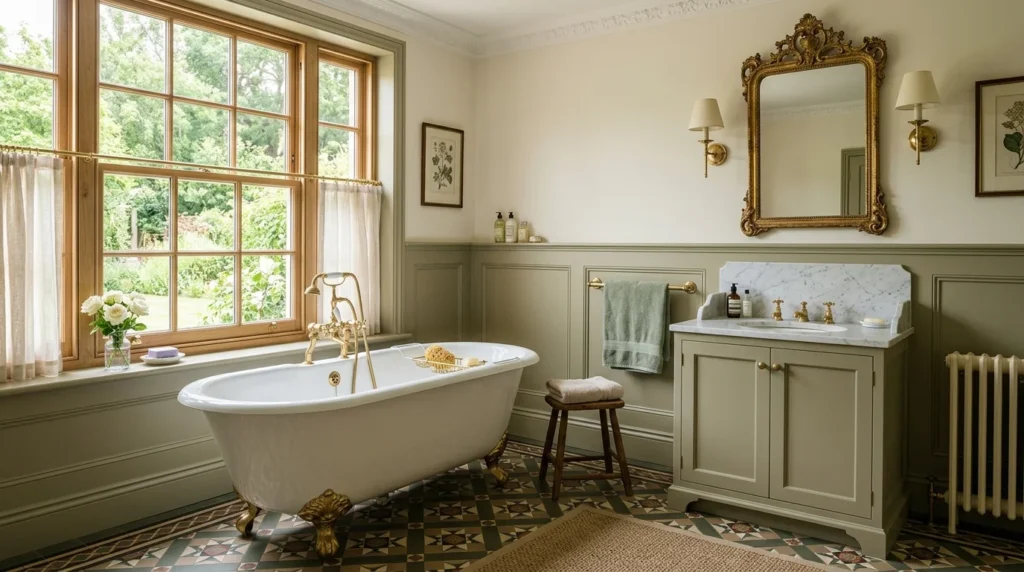
Creating a beautiful home interior often comes down to choosing between fast-moving trends and timeless character. A well-designed traditional bathroom offers a distinct sense of permanence, architectural grounding, and authentic craftsmanship that ultra-minimalist spaces struggle to replicate. Rather than relying on fleeting seasonal fads, classic decor draws inspiration from late nineteenth-century and early twentieth-century design. The result is an inviting, luxurious sanctuary celebrating substantial proportions, tactile natural surfaces, and heritage detailing.
Whether you are restoring a period Victorian terrace, renovating a country cottage, or seeking to introduce warmth and depth to a contemporary new-build, authentic styling requires a balanced approach. By blending historical shapes with modern plumbing performance, you can create a classic sanctuary that effortlessly accommodates busy daily routines.
What Defines a Classic Traditional Bathroom?
At its foundation, period bathroom design centers on architectural balance, physical permanence, and visible craftsmanship. Modern interiors frequently aim for visual invisibility with hidden drains, concealed fittings, and flat handleless cabinetry. In contrast, a classic room celebrates the physical mechanics of the space.
Key characteristics that define this enduring style include:
-
Substantial Materials: Vitreous china sanitaryware, solid brass valves, cast iron bathtubs, and natural veined stone.
-
Intricate Joinery & Moldings: Raised-panel cabinetry, framed mirrors, and decorative architectural cornicing.
-
Detailed Fixture Mechanics: Exposed shower risers, ornate bracketry, crosshead controls, and ceramic indices.
-
Warm, Grounded Palettes: Rich heritage shades paired with soft neutrals, warm metals, and textured tiles.
Achieving this look in the twenty-first century does not mean building an impractical museum piece. Today’s most celebrated projects lean into the modern traditional bathroom philosophy, using period styling on visible surfaces while concealing reliable thermostatic cartridges, high-efficiency flushing mechanisms, and durable modern materials behind the scenes.
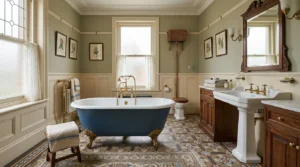
Historical Eras and Architectural Influences
Understanding the specific design codes of historical eras makes it significantly easier to curate a cohesive room rather than a disjointed collection of vintage pieces.
Victorian Opulence and Bold Geometry (1837–1901)
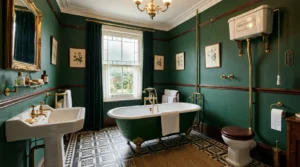
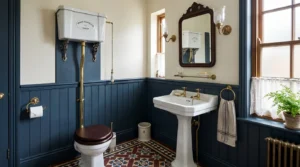
The Victorian era marked the widespread emergence of dedicated domestic bathrooms. The design language was rich, dramatic, and ornate. Victorian suites embrace bold decorative contrast, featuring dark jewel tones like forest green, ink blue, and burgundy set against crisp white sanitaryware. Signature elements include high-level pull-chain toilets, heavy claw-foot tubs with cast iron ball-and-claw feet, and intricate monochrome encaustic floor patterns.
Edwardian Refinement and Soft Symmetry (1901–1910)
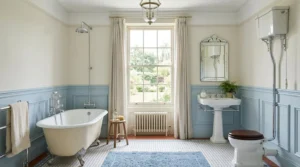
Following the density of the Victorian era, the Edwardian aesthetic championed brighter spaces, cleaner lines, and understated elegance. Sanitaryware from this period features softer curves and wider ceramic lips. Large pedestal basins with integrated splashbacks, pastel color palettes, and polished chrome pipework define the Edwardian approach. It represents a refined middle ground between classical grandeur and twentieth-century practicality.
Georgian Proportion and Farmhouse Warmth
Georgian architecture is revered for its mathematical symmetry and balanced proportions. In a bathroom setting, this translates to generous focal points, such as a centered washstand flanked by matching wall lights. Rustic farmhouse variations introduce warm natural oak, tongue-and-groove paneling, unlacquered brass bridge mixers, and earthy tones like stone, oatmeal, and soft sage.
Essential Fixtures and Heritage Sanitaryware
Sanitaryware forms the functional backbone of any bathroom layout. Choosing the correct silhouette ensures authentic period credibility.
Freestanding Tubs: Roll-Top, Slipper, and Cast Iron
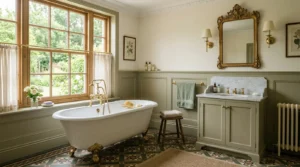
A standalone claw-foot tub or double-ended roll-top bath serves as the definitive visual anchor of the room. When choosing a bath, material selection dictates installation requirements:
-
Enameled Cast Iron: The traditional gold standard. Cast iron retains water temperature exceptionally well and provides unmatched structural solidity. However, because a filled cast iron tub can exceed 350kg to 400kg, you must have a structural engineer or qualified builder assess your timber floor joists before installation.
-
Stone Resin and Acrylic Composites: Quality acrylic and stone resin tubs replicate the exterior lines and roll-top lips of antique tubs while weighing significantly less. They are far easier to maneuver into upper-floor rooms and do not require floor reinforcement.
-
Tub Profiles: Choose a single-ended slipper tub with an elevated backrest for comfortable reading, or a symmetrical double-ended tub with central waste fittings for shared soaking.
High-Level, Low-Level, and Close-Coupled Toilets
Toilets in heritage bathrooms celebrate mechanical detailing rather than hiding it within drywall:
-
High-Level Cisterns: Mounted near the ceiling and operated via an ornate pull chain and ceramic handle. Supported by cast brass or iron ornamental brackets, this setup provides dramatic historic character.
-
Low-Level Cisterns: The ceramic cistern sits lower on the wall, linked to the pan by a short exposed flush pipe. It provides vintage styling where lower ceiling heights rule out high-level units.
-
Close-Coupled Suites: The cistern sits directly on the back of the toilet pan. This compact option fits neatly into standard layouts while retaining period curves and stepped ceramic bases.
Pedestal Sinks, Washstands, and Shaker Vanity Units
Basin choice influences both room aesthetic and everyday storage:
-
Pedestal Basins: Full vitreous china pedestals cleanly conceal waste pipes and supply lines, maintaining open floor sightlines.
-
Metal Washstands: Open frames constructed from polished brass, nickel, or chrome tubing support a ceramic basin, often incorporating an integrated front towel rail. They keep small rooms feeling spacious while highlighting metallic finishes.
-
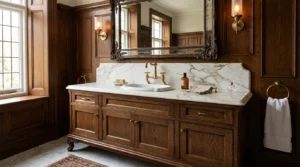
Shaker Vanity Units: When concealing toiletries and spare linens is a priority, a wooden vanity unit with shaker doors, recessed paneling, and a Calacatta marble countertop bridges vintage furniture style with modern storage needs.
Heritage Brassware: Crosshead Handles and Bridge Mixers
Taps and valves provide the tactile connection to your plumbing system. Opt for bridge basin mixer taps, which feature an arched central spout fed by two separate rising side pillars. Controls should feature classical crosshead handles with inlaid ceramic hot and cold indices or white ceramic lever handles.
Technical Tip on Water Pressure: Before purchasing traditional wall-mounted or deck-mounted brassware, check your home’s water heating system. Gravity-fed low-pressure systems require brassware with wider internal bores (0.1 to 0.2 bar rating), whereas high-pressure unvented cylinders and combi boilers allow for a broader range of thermostatic valves.
The Modern Traditional Hybrid: Blending Vintage Charm with Daily Function
One of the most practical developments in interior design is the modern traditional hybrid style, often called transitional design. This approach captures the cozy, decorative charm of historical fixtures without sacrificing the speed and comfort of contemporary living.
| Heritage Element | Modern Upgrade | Practical Benefit |
| Cast Iron Aesthetic | Stone Resin Composite | Lighter floor load, easier second-floor installation |
| Exposed Pipework | Concealed Thermostatic Valve | Anti-scald protection with stable temperature |
| Traditional Radiator | Dual-Fuel Heated Rail | Warm towels year-round without firing central heating |
| Detailed Vanity Design | Soft-Close Undermount Slides | Smooth, silent everyday operation |
| Decorative Tile Flooring | Electric Underfloor Heat Mats | Warm tile surfaces on cold mornings |
Walk-In Showers with Exposed Thermostatic Valves
Modern households rely heavily on daily showers. You do not need to settle for an awkward shower curtain over a claw-foot tub if your space allows for a dedicated enclosure. A walk-in enclosure with minimalist, ultra-clear glass or arched Crittall-inspired frames pairs naturally with an exposed traditional shower system. The exposed riser pipe, oversized circular deluge showerhead, and independent handheld wand become standout decorative features.
Hidden Technology: Concealed Cisterns and Underfloor Heating
The secret to a successful hybrid interior is keeping modern technology invisible:
-
Concealed In-Wall Cisterns: Pair a wall-hung or back-to-wall toilet pan with a dual-flush plate styled with ceramic or antique brass push buttons.
-
Electric Underfloor Heating: Lay thin heating mats beneath patterned ceramic or natural stone flooring. This provides gentle, ambient warmth and dries wet floors quickly, eliminating the need for oversized modern panel radiators.
-
Demisting Mirrors: Install heated demister pads behind ornate gilt or brass-framed mirrors to maintain a clear reflection after hot showers.
Authentic Wall Treatments and Floor Coverings
Surfaces establish the architectural texture of a traditional bathroom, tying together the freestanding fixtures and metallic hardware. While traditional ceramic tiles remain a classic choice, many homeowners desire the visual warmth of aged timber floors. However, real solid wood can warp and swell under bathroom humidity. For a durable, water-resistant alternative that captures the look of rustic oak without maintenance hassles, check out this comprehensive guide to luxury vinyl plank (LVP) flooring to see how modern planks perform in wet areas.
Wainscoting, Beadboard, and Wood Paneling
Half-height wall paneling adds instant architectural substance to plain drywall:
-
Tongue-and-Groove Beadboard: Excellent for farmhouse, cottage, and coastal styles. It introduces vertical lines that draw the eye upward, making standard ceilings feel taller.
-
Raised-Panel Wainscoting: Ideal for stately Victorian and Georgian aesthetics, creating structured framing around the room.
-
Moisture Protection: Always specify Moisture-Resistant MDF (MR MDF) or seasoned hardwood for bathroom paneling. Seal the rear and cut edges with primer before installation, and paint using a durable, mold-resistant interior acrylic eggshell finish.
Victorian Geometric Floor Tiles and Metro Wall Tiles
Tile patterns inject pattern and period geometry into the space:
-
Victorian Geometric Floors: Intricate encaustic patterns, octagon-and-dot configurations, and classic monochrome checkerboard layouts anchor the room with vintage charm.
-
Beveled Subway (Metro) Tiles: Standard 100mm x 200mm subway tiles laid in a classic brick-bond pattern protect wet areas around tubs and basins. Using a soft gray grout highlights the tile bevels while resisting discoloration far better than pure white grout.
Calacatta Marble and Natural Stone Countertops
Natural marble remains the quintessential stone surface for luxury period vanities. Carrara marble offers soft gray veining with a cool undertone, while Calacatta marble provides bold, warm gold and charcoal veining. If you prefer a surface that does not require periodic sealing or protection against acid etching, high-grade quartz slabs offer convincing stone patterns with non-porous durability.
Hardware Finishes, Lighting, and Ventilation Protocols
The metallic finishes and lighting fixtures you select tie the entire room together into a harmonious scheme.
Selecting Metal Hardware in a Traditional Bathroom
-
Unlacquered Living Brass: Unsealed brass oxidizes naturally with air and water contact, developing a unique, organic patina over time. It is the most authentic choice for historical restorations.
-
Polished Nickel: Plated nickel has a warmer, subtle golden undertone compared to chrome. It adds a luxurious depth that pairs effortlessly with warm stone, wood paneling, and heritage paint colors.
-
Polished Chrome: Highly durable, corrosion-resistant, and cost-effective. Chrome provides a bright, crisp finish that stays lustrous with minimal upkeep.
Lighting Zones and Electrical Safety
Period-style lighting must always comply with modern building safety standards. Bathrooms are divided into electrical safety zones based on proximity to water sources:
Install IP44-rated vintage-style wall sconces on either side of your vanity mirror at eye level to eliminate harsh overhead shadows during grooming. For ambient ceiling lighting, use IP65-rated flush fittings or recessed downlights with warm white bulbs (2700K to 3000K) to keep the space inviting rather than clinical.
Extraction and Humidity Control in traditional bathroom
High humidity ruins decorative joinery, causes wallpaper peeling, and promotes grout mold. Install a continuous-running, low-decibel extractor fan sized appropriately for your room volume (calculated in cubic feet or meters per minute). Positioning the extraction point near the primary shower zone ensures steam is evacuated before settling on cool woodwork.
Smart Ideas for Small Traditional Bathrooms and Cloakrooms
Implementing classic design within a compact footprint requires clever space-saving choices:
-
Use Open Metal Washstands: Swapping a bulky, solid vanity cabinet for a leg-mounted ceramic washstand keeps the floor visible underneath, creating the optical illusion of greater square footage.
-
Design a Heritage Shower-Over-Bath: Combine your bathing and showering areas by pairing a flat-bottomed shower bath with an exposed thermostatic shower valve and a clear, hinged glass screen with subtle brass bracketry.
-
Run Continuous Geometric Floor Tiles: Keeping the same floor tile pattern across the entire room, right into open shower recesses, creates an unbroken visual plane that makes small rooms feel wider.
-
Choose Wall-Mounted Basin Taps: Mounting your taps directly to the wall behind the basin frees up valuable space on the ceramic washstand, allowing for a narrower vanity profile.
-
Add a Statement Antique Mirror: Position an ornate framed mirror directly opposite a window or primary light source to maximize illumination and reflect decorative wall paneling.
FAQs
Are traditional bathroom fixtures harder to maintain than modern fixtures?
Detailed mouldings, raised tile grout lines, and crosshead tap indices require slightly more cleaning attention than flat, flush modern surfaces. However, selecting quality vitreous china sanitaryware with dirt-repellent glazes, using ceramic disc cartridges inside taps, and choosing sealed tile grout keeps everyday cleaning straightforward and quick.
Can I install a freestanding roll-top bath in a traditional bathroom?
Yes. Many manufacturers produce compact freestanding slipper and roll-top tubs measuring 1400mm to 1500mm in length. These compact designs feature deeper bathing wells, allowing for a comfortable soak while fitting within the footprint of a standard straight bath.
What is the practical difference between polished nickel and polished chrome?
Polished chrome has a cool, silver-blue undertone and is exceptionally resilient against tarnish and hard water marks. Polished nickel features a warmer, soft golden undertone that gives an authentic historic look. However, nickel requires occasional gentle buffing with a soft microfiber cloth to prevent water spotting.
How do I prevent moisture from warping bathroom wood paneling?
Always use moisture-resistant MDF (MR MDF) or properly seasoned timber with an expansion gap left along the bottom floor edge. Seal all front, back, and cut edges with an oil-based or specialized shellac primer before installation, and paint with a high-grade, mold-resistant interior acrylic eggshell finish. Pair this with an appropriately sized IP44/IP65 extractor fan.
Ultimately, a well-planned traditional bathroom blends historical architectural detailing with modern engineering. By carefully selecting your primary focal fixtures, choosing durable materials, and respecting room proportions, you can create a durable, practical, and beautiful bathroom space that brings long-term value and character to your home.


More Stories
Wet Room Shower Tray: Types, UK Costs and Installation Guide
Home Improvement: Budgeting for Bathroom Renovations, Essential Tips